Fertilizing, Weeding, Watering, and Harvesting Green Garlic & Scapes
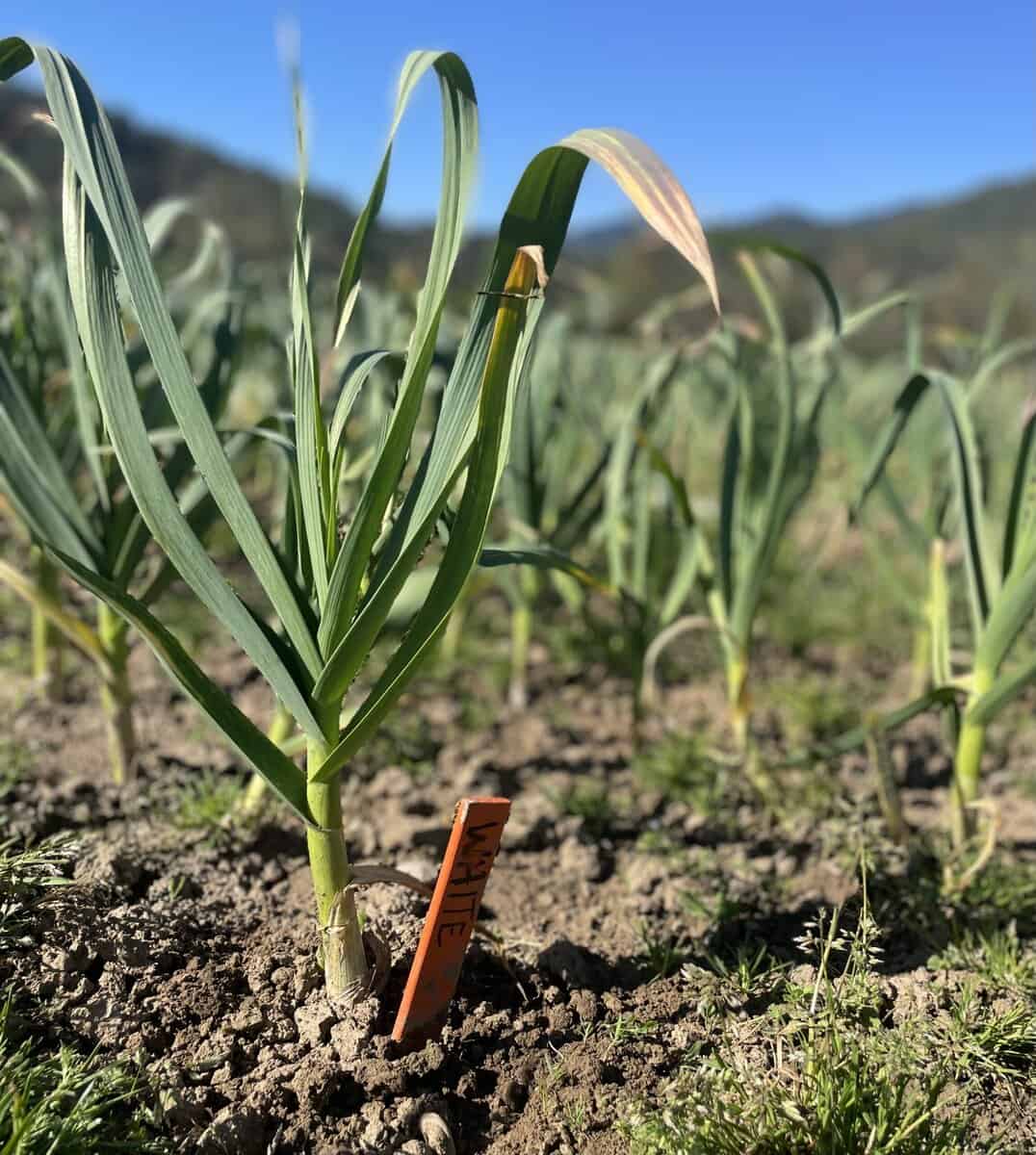
Spring is when garlic really begins to take off. After the dark days of winter, the plants resume growth as soil temperatures warm and day length increases. Extra attention to fertilizing, keeping beds weed-free, maintaining steady moisture, and even enjoying scapes and a few green garlics, can make a big difference in the final crop.
Fertilizing: Feed the Leaves Early
Garlic size is largely determined by how many leaves the plant produces before it begins forming bulbs. Each leaf becomes one layer of the bulb wrapper, so strong early growth leads to larger bulbs later.
A spring feeding with a balanced organic fertilizer helps support this leaf growth. Apply fertilizer once plants resume active growth and soil temperatures begin to warm. Note that fertilizers become available to plants at different rates.
- liquid fertilizers such as fish emulsion – very fast/immediate
- blood meal and fish fertilizer – fast N (1-2 weeks)
- balanced fertilizers – moderate N (2-4 weeks)
- feather meal – slow N (5-6 weeks)
- Compost is very slow and typically is applied only in the fall
For varieties that prefer two spring feedings, many growers will blend a fast and a slow fertilizer together for an extended release, for example a fish fertilizer and feather meal applied at the same time, to provide nutrients over a longer time span. Fertilizers can be applied directly to the soil and cultivated in or even applied on top of mulch to wash in with rain or irrigation. Liquid fertilizers can be put through fertigation systems or sprayed onto foliage and soil.
Organic fertilizers take time to release nutrients, so the goal is to apply them early enough that nitrogen becomes available while the plant is still making leaves. Once bulb formation begins, additional nitrogen contributes little to bulb size and can delay maturity.
Keep track of when your hardneck garlic makes scapes from year to year and plan to stop fertilizing about three to four weeks before you anticipate scapes will begin forming.
Softneck garlic, which does not produce scapes, should stop receiving nitrogen once plants reach full height and the stems begin thickening at the base.
Garlic Types and Fertilizing
Remember, garlic is in the field through the most challenging conditions of the year, and sometimes their stressed appearance is due to conditions not lack of fertility. Pay close attention to new growth – if new leaves are dark green and healthy looking don’t fret about yellowed lower leaves. Many varieties will rob lower leaves to feed new growth, and varieties with thinner leaves will show more stress with cold snaps.
Different garlic groups grow at slightly different speeds in spring. Early-maturing types need their nutrients sooner, while later types can tolerate fertilizing slightly later.
Turban garlic – a fast-growing light feeder
Examples: Chinese Pink, Basque Turban
These are the earliest garlics to mature and often produce scapes very early or only weakly. Because their vegetative stage is short, they should typically be fertilized once by late winter/early spring.
Asiatic garlic – an early mid-season moderate feeder
Examples: Pyongyang, Asian Tempest
Asiatics are closely related to Turbans and though they emerge later in the fall, they mature early to mid-season . They produce short scapes with very long beaks, before many other hardneck varieties. Their rapid spring growth means they need nutrients early in the season, and fertilizing should be complete by late March or early April in most climates.
Creole garlic – a mid-season moderate feeder
Examples: Creole Red, Aglio Rosso di Sulmona, Donostia Red
Creoles are early-to-mid season garlics. They often require only one moderate spring feeding. Fertilizing should usually be finished by late March or early April in most climates.
Purple Stripe and Marbled Purple Stripe – a mid-late heavy feeder
Examples: Chesnok Red, Kishlyk, Marbled, Khabar
These are robust plants that can produce very large bulbs. They typically benefit from two spring feedings, with fertilizing ending shortly before scapes form.
Artichoke softneck garlic – a mid-season heavy feeder
Examples: Inchelium Red, Lorz Italian
These softneck garlics produce large plants with many cloves and respond well to moderate fertility. They can tolerate slightly later fertilizing than early hardneck types and can benefit from two feedings.
Silverskin softneck garlic – a mid-late season moderate feeder
Examples: Silver Rose, Cascade Fire
Silverskins are a late-maturing garlic and excellent keepers. They do best with moderate feeding, often just once in the spring.
Weed Control: Give Garlic the Advantage
Garlic competes poorly with weeds. Even moderate weed pressure can reduce bulb size because weeds steal light, nutrients, and moisture during the plant’s most important growth period, plus vigorous hoeing can damage shallow roots and stunt growth. Spring is the key time to keep beds clean. Stay ahead of weeds now and your garlic will benefit.
Watering: Steady Moisture for Bulb Development
Garlic may not look as “thirsty” as your young leafy greens but don’t neglect watering now. Garlic prefers consistent soil moisture during the spring growth period. Dry conditions while plants are forming leaves and bulbs can limit final bulb size. Water deeply but avoid constantly wet soil. Well-drained soil with steady moisture is ideal. We water consistently until harvest dry-down when only two sets of green leaves remain.
Harvesting Green Garlic: The First Taste of the Season
One of the pleasures of growing garlic is enjoying it before the bulbs are mature. In spring, extra plants, doubles or smaller individuals can be harvested as green garlic. We often take smaller cloves and plant several to a hole for a ready harvest of green garlic “bunches” for spring feasting and pesto. The entire plant—from white stem to green leaves—is edible and delicious sautéed, grilled, or used in soups and stir-fries.
Garlic Scapes: A Seasonal Treat
Hardneck garlic varieties produce flower stalks known as scapes. These begin curling upward in late spring.
Removing scapes once they form encourages the plant to direct energy into bulb growth. Fortunately, scapes are also a wonderful seasonal vegetable, prized in fresh garden meals and popular at farmer’s markets. Their mild garlic flavor makes them perfect for pesto, stir-fries, grilling, or simply sautéing in butter or olive oil. We ferment, dehydrate and freeze-dry an abundance of garlic scapes every spring for our garlic grinders and seasoning blends. An interesting note – many folks with a sensitivity to garlic can eat the greens and scapes, so bring some along for your market table.
Looking Ahead to Harvest
By early summer, garlic plants begin drying from the bottom up as bulbs reach maturity. With good spring care—adequate fertility, minimal weed competition, and consistent moisture—you’ll be well on your way to a healthy garlic harvest.
In the meantime, spring offers some of the best culinary moments in the garlic season: tender green garlic and flavorful scapes. Enjoy these early treats while waiting for harvest!